Did Mary Queen of Scots Ever See Her Son Again

James Half-dozen and I
James VI and I was a hugely significant Stewart rex, but has been overshadowed by his notorious relations: his predecessor in Scotland, his mother, Mary, Queen of Scots; in England, his cousin, Elizabeth I; and his successor in both kingdoms, Charles I.
Who was James VI and I?
James Six and I was a hugely significant Stewart king, but has been overshadowed by his notorious relations: his predecessor in Scotland, his mother, Mary Queen of Scots; in England, his cousin, Elizabeth I; and his successor in both kingdoms, Charles I.
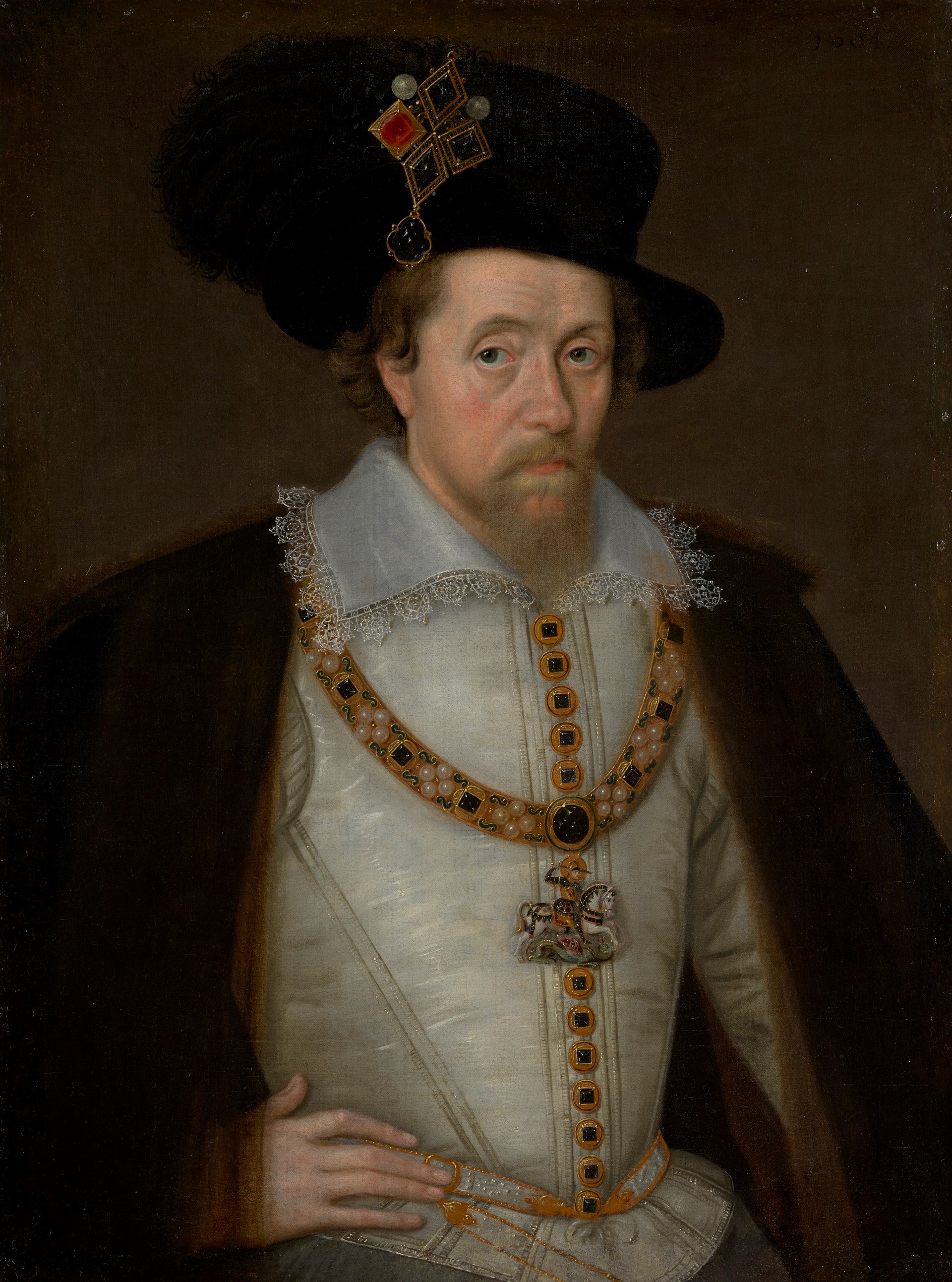
To a higher place: James VI and I subsequently he had acceded to the throne and moved to London. Ancestral to National Galleries Scotland by Sir James Naesmyth 1897. Image courtesy of National Galleries Scotland.
Built-in in 1566, he was the production of Mary'south ill-fated marriage to Henry, Lord Darnley. Darnley's bump-off in early on 1567, and Mary's subsequent over-jerky wedlock to ane of its perpetrators, Lord Bothwell, triggered events that led to Mary's downfall.
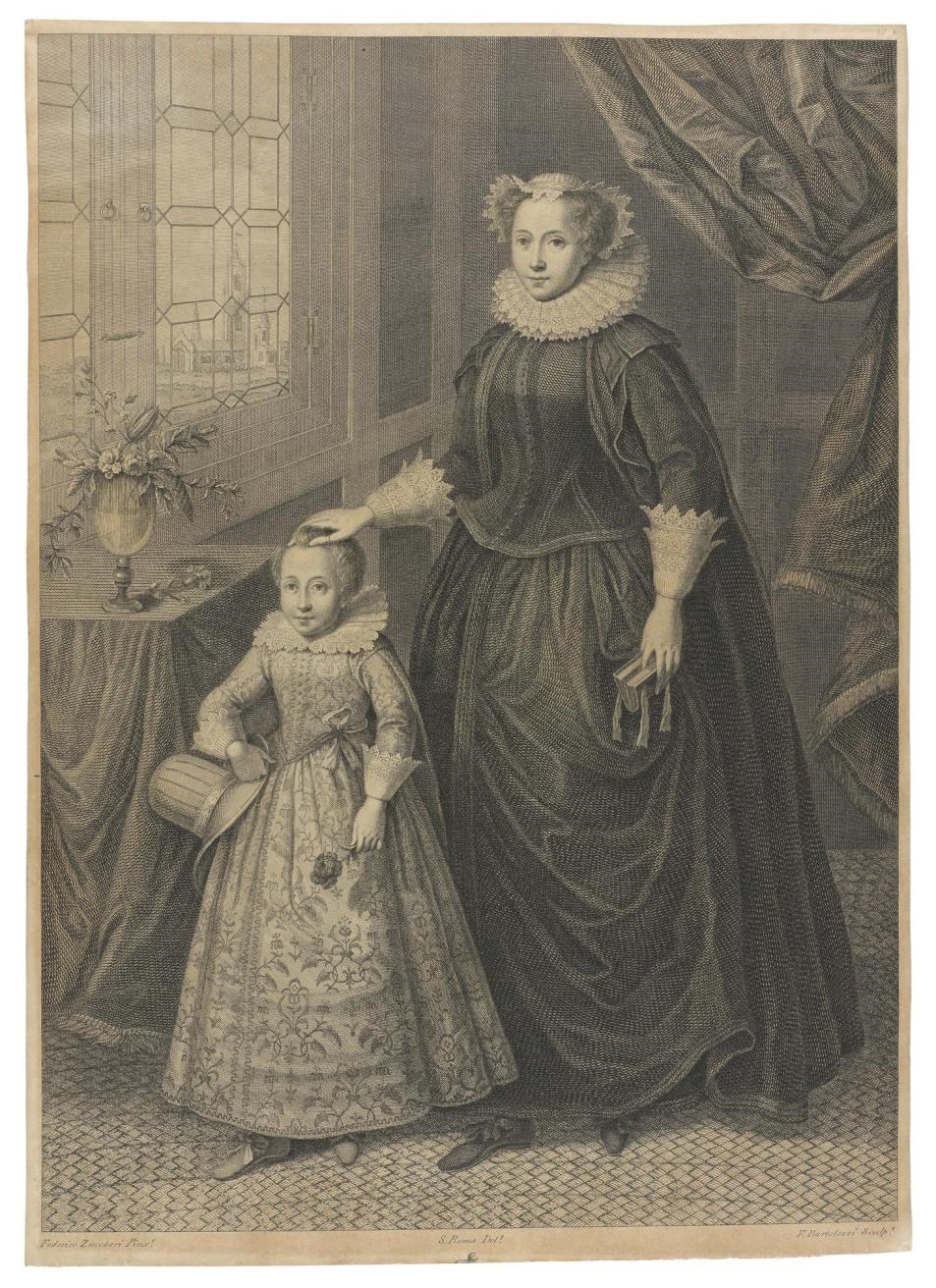
Above: Engraving of Mary Queen of Scotland with her son (later James Half dozen and I), later a painting by F. Zucherri, published 1779.
James Six became king of Scotland in 1567 when Mary was forced to abdicate. On the death of Elizabeth in 1603, he became James I of England. He is thus known as James VI and I.
In 1590 he married Anna, the sister of the Danish rex, Christian IV. They had numerous children, three of whom survived infancy: Henry, who died afterward a short disease in 1612, Charles who was to succeed James, and Elizabeth, who married Frederick, elector of Palatine, and the swiftly deposed King of Bohemia. Romantically she has get known equally the Wintertime Queen.
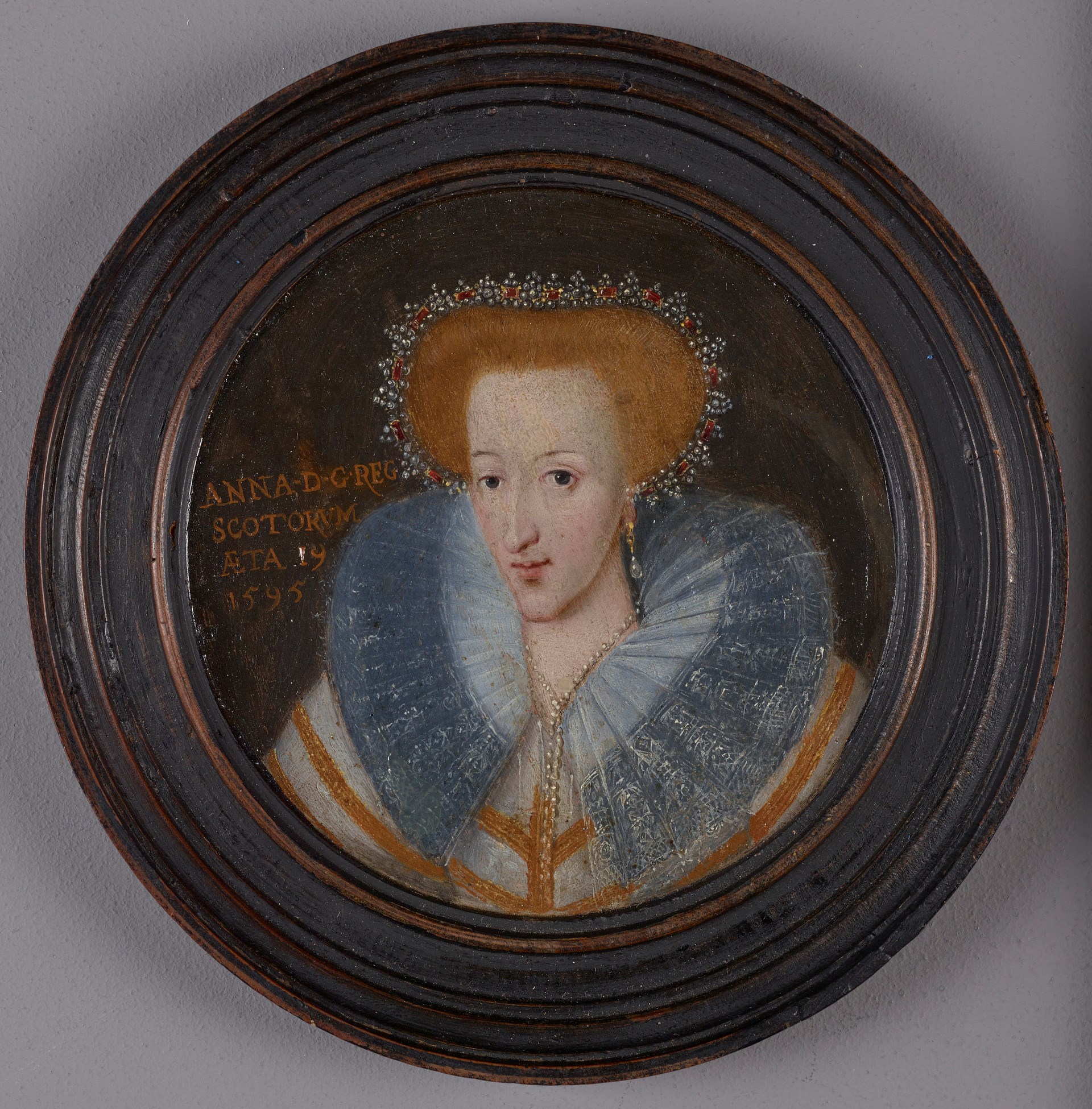
In a higher place: Anne of Denmark, by an unknown creative person. Bequeathed to National Galleries Scotland by A.W. Inglis 1929. Paradigm courtesy of National Galleries Scotland.
Different his female parent or his son Charles, James died of natural causes in his ain bed in 1625.
A notable monarch
James was one of the nigh long-standing monarchs of Scotland, king for 58 years from the historic period of one. Of the Scottish monarchs before the Anglo-Scottish spousal relationship of 1707, merely William the Lion (1165–1214) comes close in longevity.
Only he is notable not just for the length of his reign, simply for the corporeality that he managed to attain within information technology.
Of these achievements, possibly the most meaning of all was his careful management of his peaceful succession to the English throne in 1603. In doing so, he brought the 'auld enemies', the kingdoms of Scotland and England, together under the kingship of one monarch. This dynastic or regnal matrimony became known as the 'Union of the Crowns', which included that of Republic of ireland also. In 1604, James proclaimed himself King of Corking Britain. So James's reign produced the get-go Anglo-Scottish matrimony (though this was not full political wedlock) which helped to form the background to the formal union of 1707.
James and Mary, Queen of Scots: a troubled relationship
In 1567, at the age of 1, James was placed in Stirling Castle for his care and rubber. Post-obit a visit to see him, Mary was 'abducted' by James Hepburn, Lord Bothwell (whether or not she was a willing participant is unknown) and forced into marriage to him. This visit proved to exist the final time James ever saw his mother.
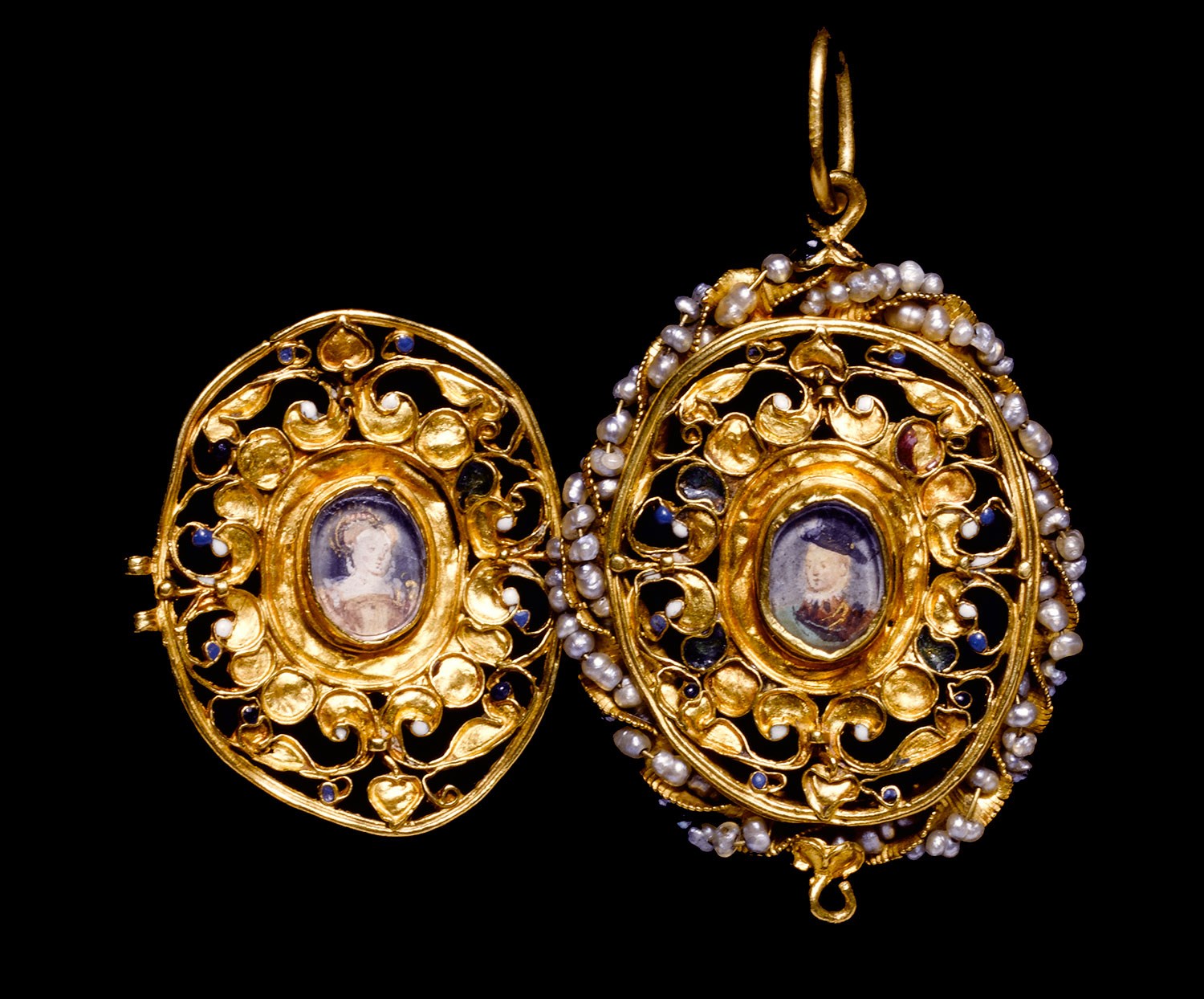
Higher up: The Penicuik jewels. This locket is said to evidence Mary, Queen of Scots and her son James on the contrary. The Clerks of Penicuik had a connection with Mary through marriage. In the 17th century, a member of the family unit married a granddaughter of Giles Mowbray, one of the Queen's servants during her English language imprisonment. It is possible that the necklace is made from the beads of bracelets given by the Queen to Giles Mowbray, merely earlier her death in 1587.
Over the adjacent twenty years they had a difficult human relationship – hampered by the physical distance between them, the problems of communication past letter or give-and-take of rima oris, and dependent on who had custody of the young king – and most chiefly, tensions over Mary's attempts to regain her Scottish throne during her English language captivity. Mary's return would have compromised James'due south ain kingship. Famously, James did niggling other than protest to Elizabeth over Mary's execution in 1587.
James ordered a splendid tomb to be made for Mary in Westminster Abbey when he became rex of England. Mary's marble tomb with its elaborate canopy outshines the one he created for his predecessor on the English language throne, Elizabeth I. In death you could say that Mary triumphed over the queen that had signed her decease warrant, and in memorialising Mary in such a way, James perchance assuaged any guilt he may take felt. Given her claim to the English throne (as a great-granddaughter of Henry VII), Mary would have idea information technology plumbing fixtures to be laid to rest aslope other English monarchs.

Plaster cast of the tomb of Mary, Queen of Scots.
The boy king
As an babe, James had councillors ruling in his proper name, but he took upward his personal reign in his mid-teens, in the early 1580s. His childhood was spent at Stirling castle in the intendance of Annabella, Countess of Mar, whose son became a lifelong friend of the male monarch. He was tutored by the stern Presbyterian and humanist George Buchanan.
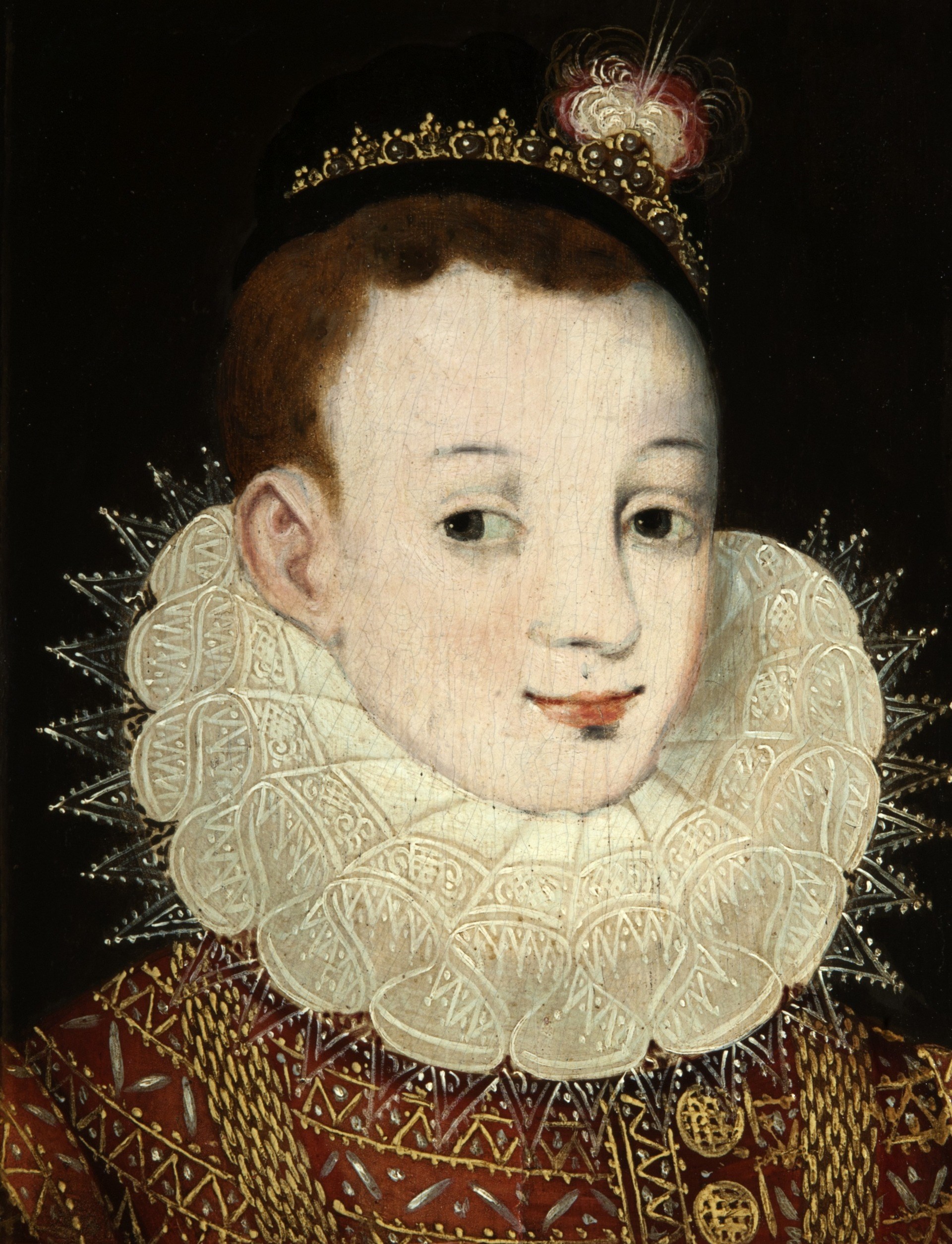
Above: James VI as a boy, by an unknown artist. David Laing bequest to the Society of Antiquaries of Scotland, gifted to National Galleries Scotland in 2009 and on loan to the National Museum of Scotland. Image courtesy of National Galleries Scotland.
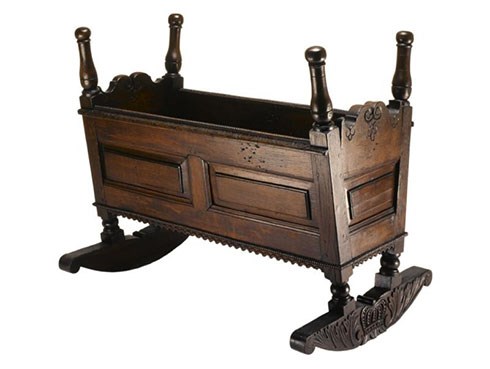
Above: Cradle said to accept been that of Mary, Queen of Scots at Linlithgow Palace.
James was a clever male child, very well educated, who learnt the art of statement early on. In 1579, aged, 12, he made a formal entry as king into Edinburgh. Only in the years following he suffered from political and religious factionalism at courtroom, and in 1582 was abducted in the Ruthven Raid by several nobles, including the earl of Gowrie, who wanted to ensure a Presbyterian-inclined authorities of Scotland.
By 1585, withal, James was quondam enough to begin to impose his own will on the feuding factions.
God's lieutenant on earth: James equally king
James had strong views on the rights of kings. His tutor Buchanan's book De Jure Regni had called for a contractual monarchy in which kings can exist held to account for their actions. This was an attempt to legitimise the overthrow of James'southward female parent Mary. James was subsequently to publish a rebuttal, The Truthful Law of Costless Monarchies, which set out an opposing opinion on the duties of the subject to the king, and vice versa. He saw himself as ane of God's lieutenants on world, and thus his power was the result of divine will, and not to be argued with.
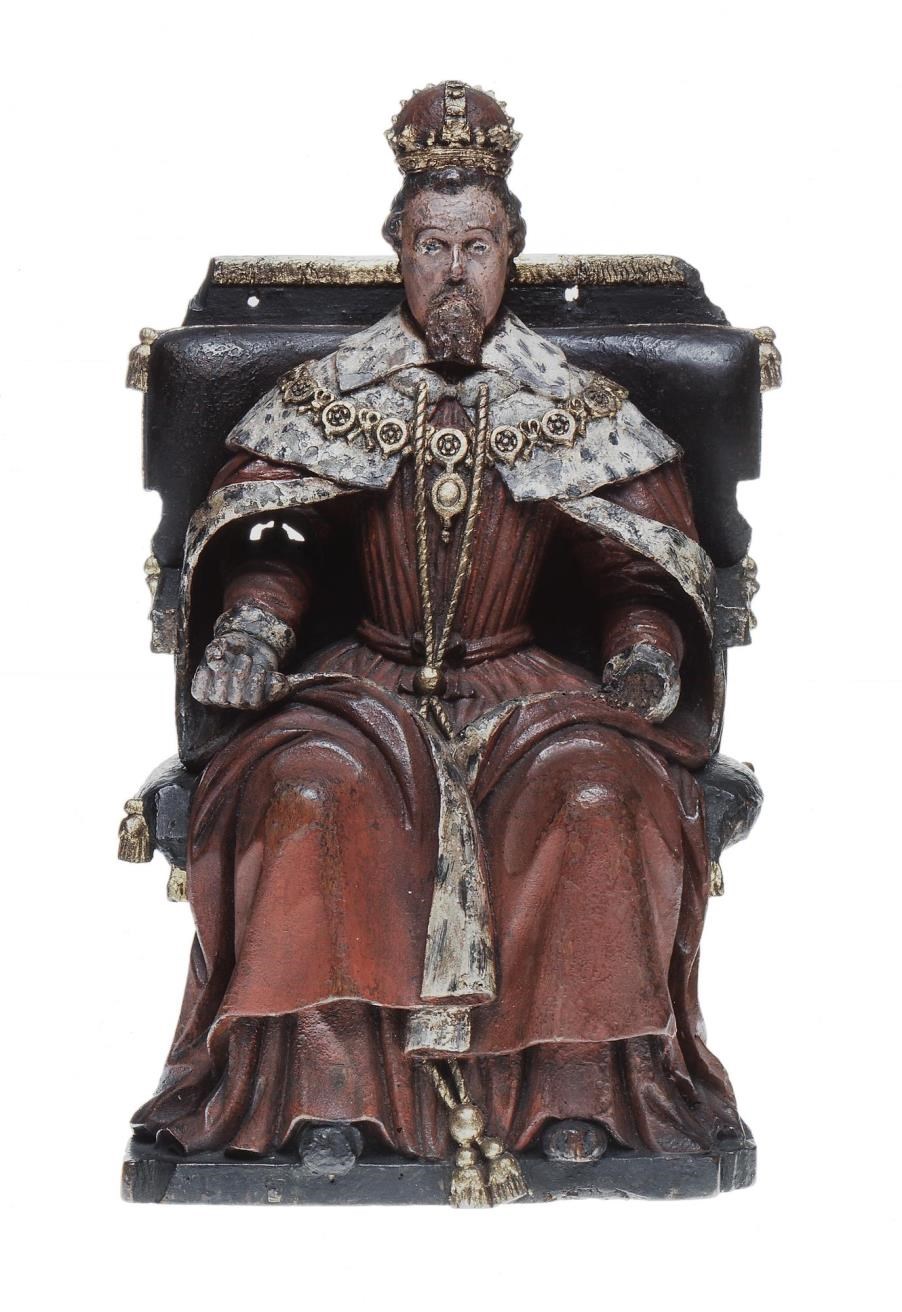
In a higher place: Articulated figure of James VI on the throne. A lever at the back moves his arm which may take one time held a sceptre.
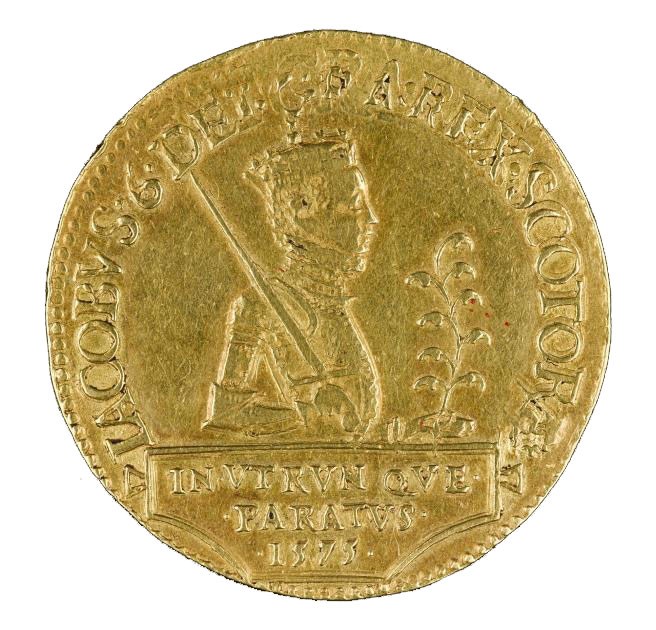
Above: Front end of James VI gold 20-pound piece, Edinburgh, 1575.
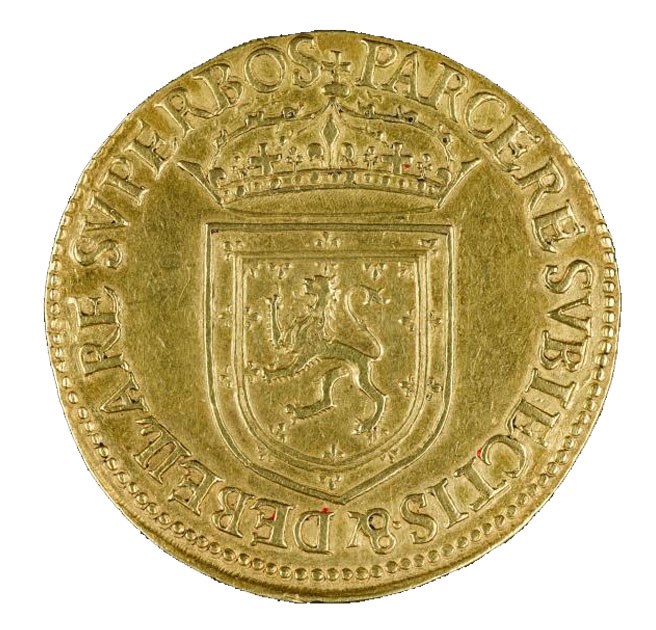
In a higher place: Reverse of James VI gilded 20-pound piece, Edinburgh, 1575.
James was also renowned for having favourites at court. Because these men exerted meaning power they stimulated resentment amidst those less favoured.
These shut relationships accept led to speculation that James was gay, although it would exist difficult to evidence this conclusively.
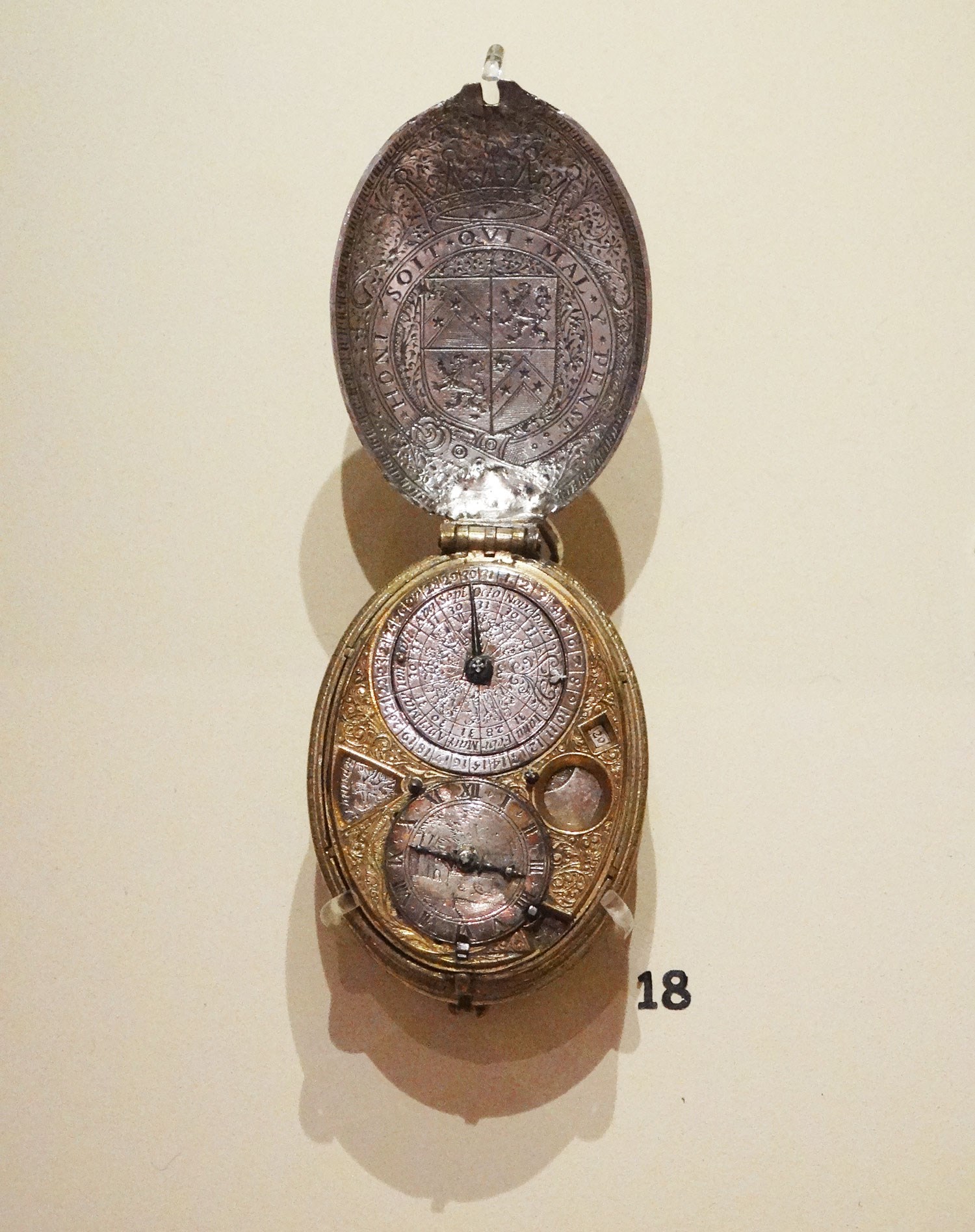
Above: Lookout thought to have been given by James to the earl of Somerset: his principal Scottish favourite at Whitehall was Robert Ker from about Jedburgh, whom James ennobled as the earl of Somerset. Somerset was implicated in a political murder and in 1615 fell from grace.
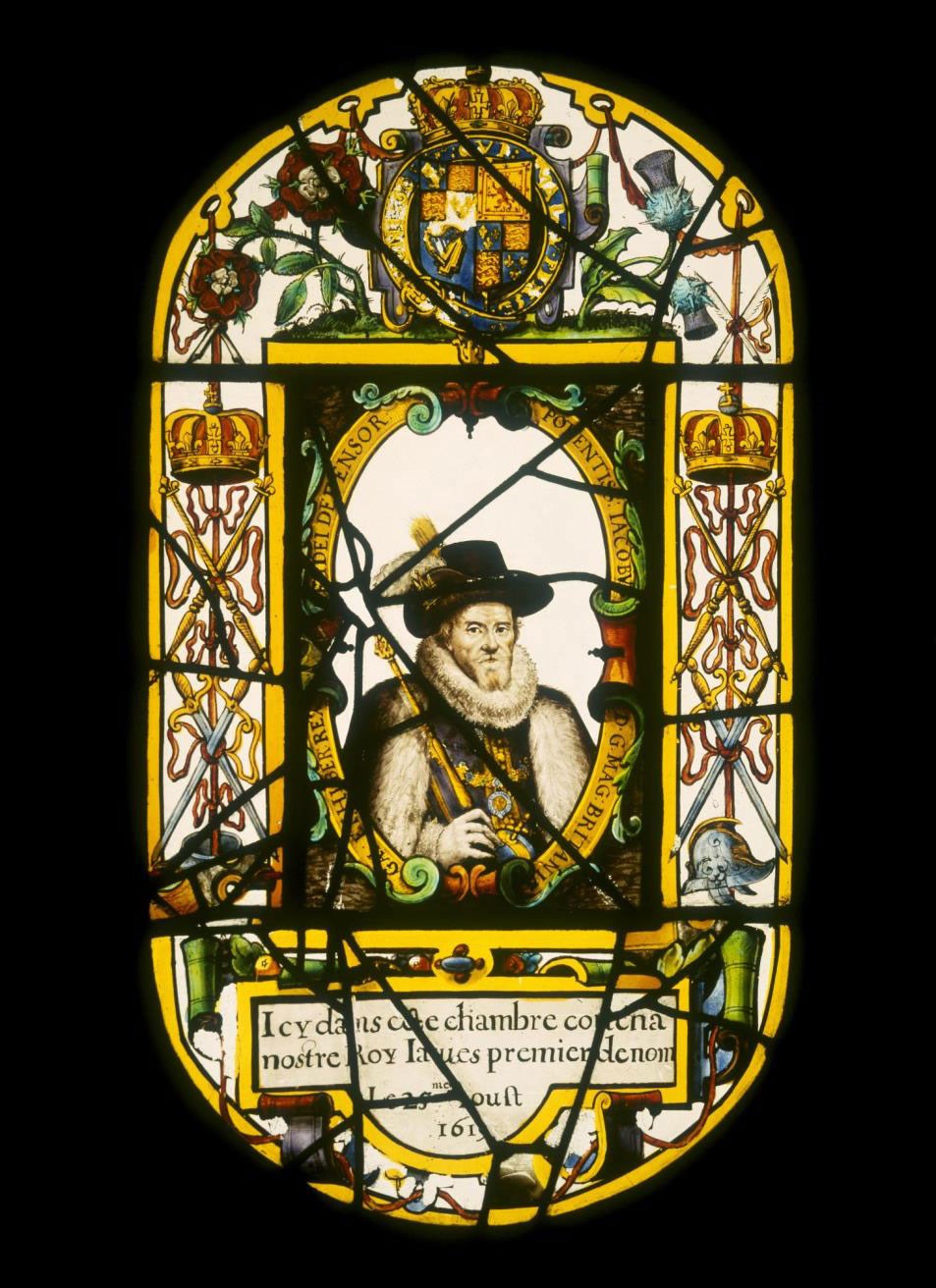
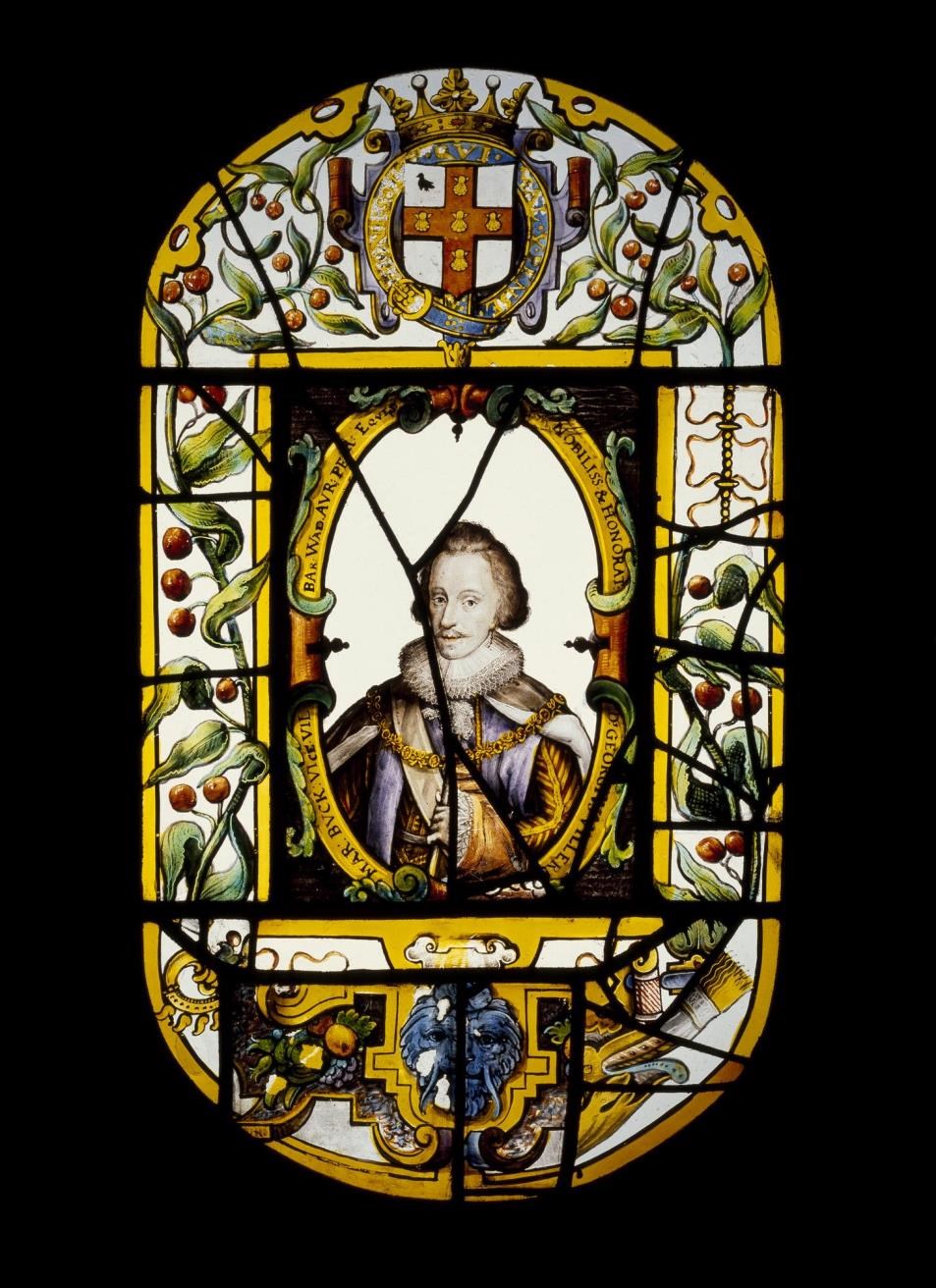
Above: Stained glass panels of James and the duke of Buckingham: the English language George Villiers presently replaced Somerset in James's affections and was speedily elevated to the peerage. He was to remain i of the rex's closest directorate and accompanied the young Prince Charles on his fruitless journey to Spain in search of a royal bride.
James and the kirk
The Protestant Reformation in Scotland created a more Calvinist version of Protestantism, known in Scotland as Presbyterianism, in which all participants were said to be equal. James's relationship with the kirk was somewhat fractious. Although he was a committed Protestant, he believed in a less extreme, Episcopalian version of Protestantism, in which the male monarch was the head of the church, and ruled information technology through bishops. His idea of the church building's part more than closely resembled that of the English Anglican church. An infamous incident occurred in 1596 when a Presbyterian government minister, Andrew Melville, shook the king past the sleeve calling him simply 'God'southward featherbrained vassal' in the religious sphere.
James'southward ecclesiastical legacy endures in the Male monarch James Bible of 1611, which he commissioned.
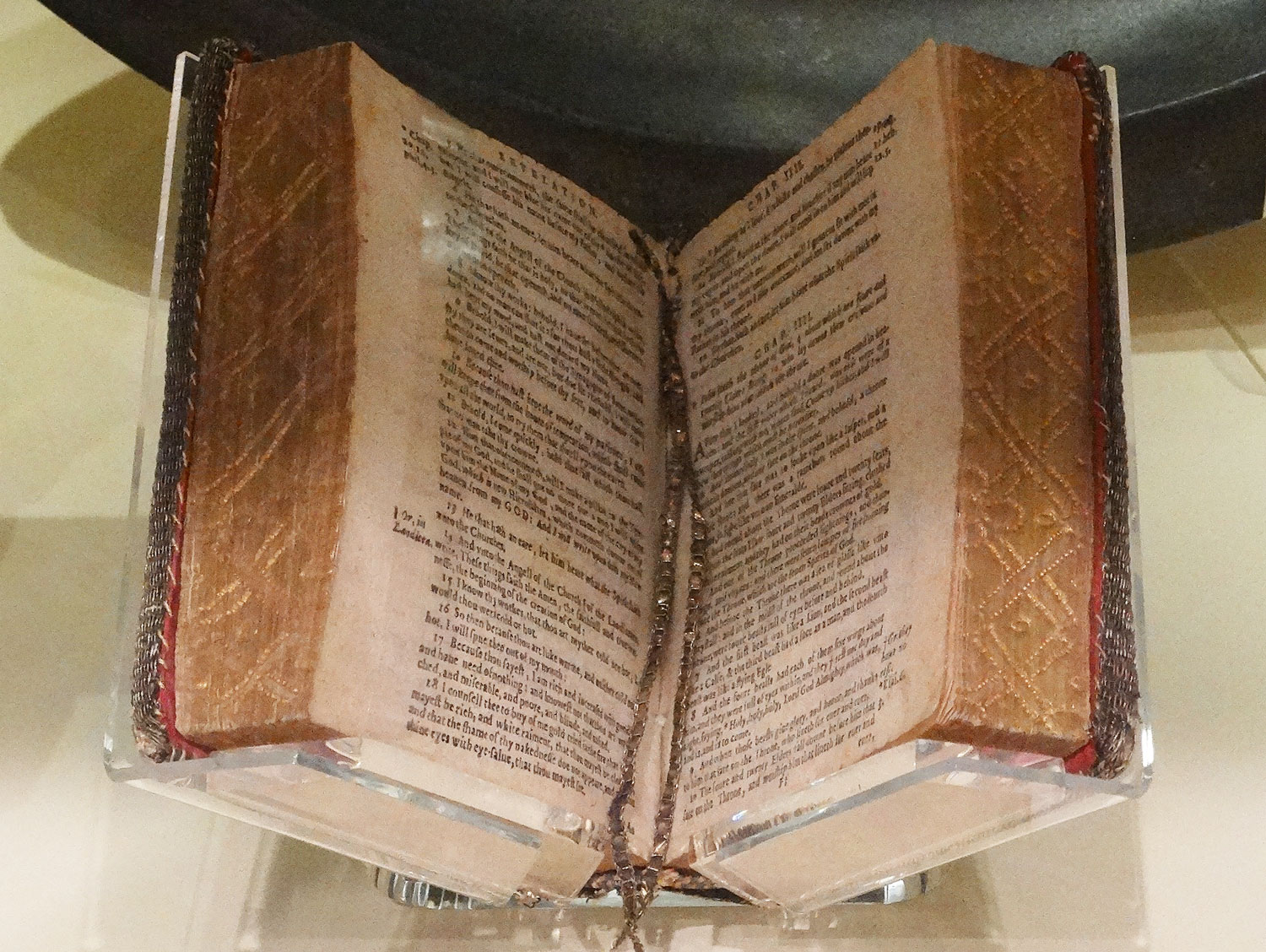
Above: New Attestation of 1619: New Testament (London, by Bonham Norton & John Bill, 1619) and Psalm book (London, 1621) bound together and covered with silver and silver-gold threadwork and multicoloured petit point embroidery.
Marriage
In 1590, James married Anna, the sister of the Danish king, Christian IV. After a rough crossing of the North Ocean, she received a grand formal entry into Edinburgh. She was a powerful effigy in her own right, and maintained good relations for Scotland with the rich Protestant Danish male monarch.
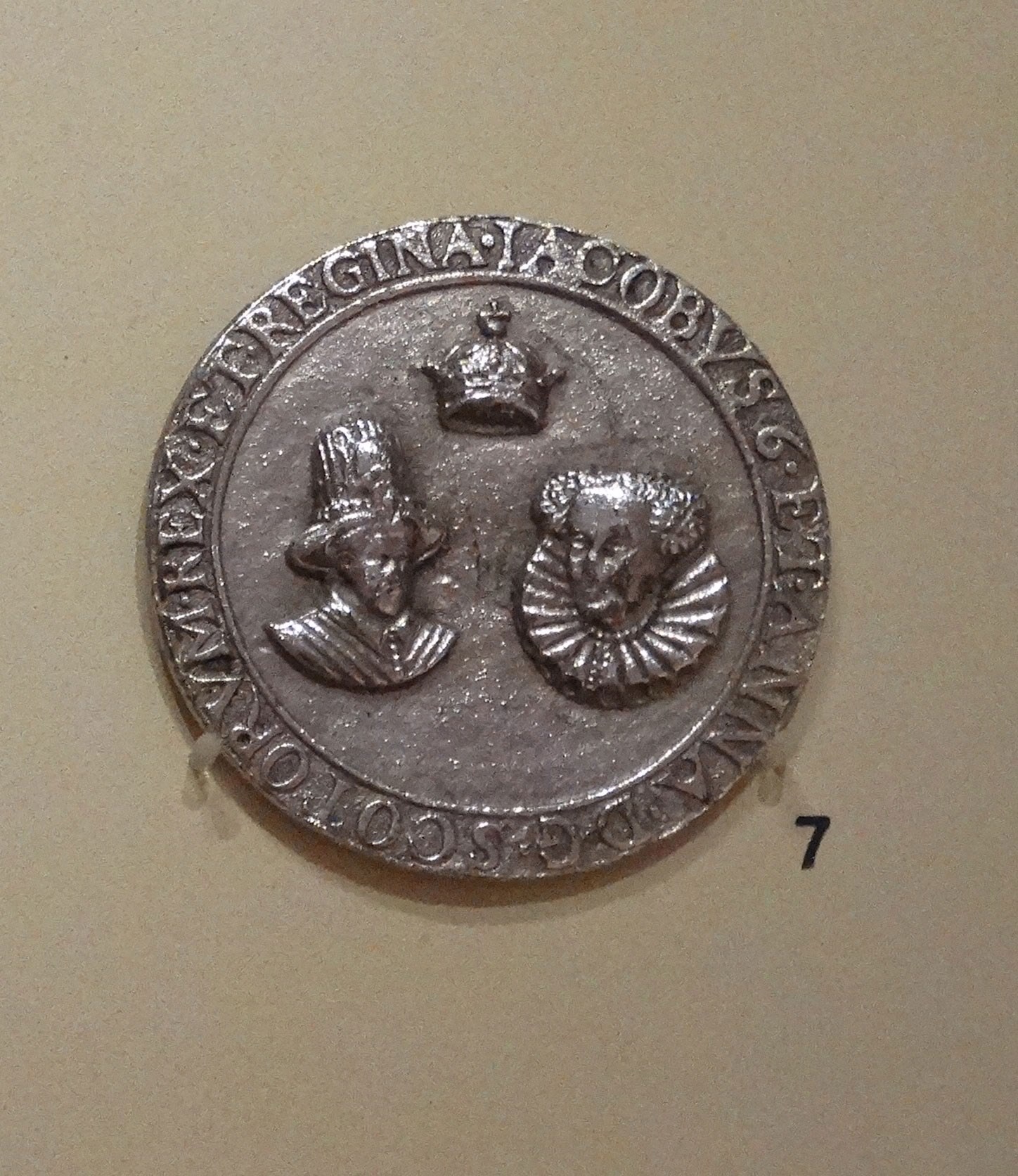
Higher up: Silvery medal struck for James'south spousal relationship to Anna in 1590.
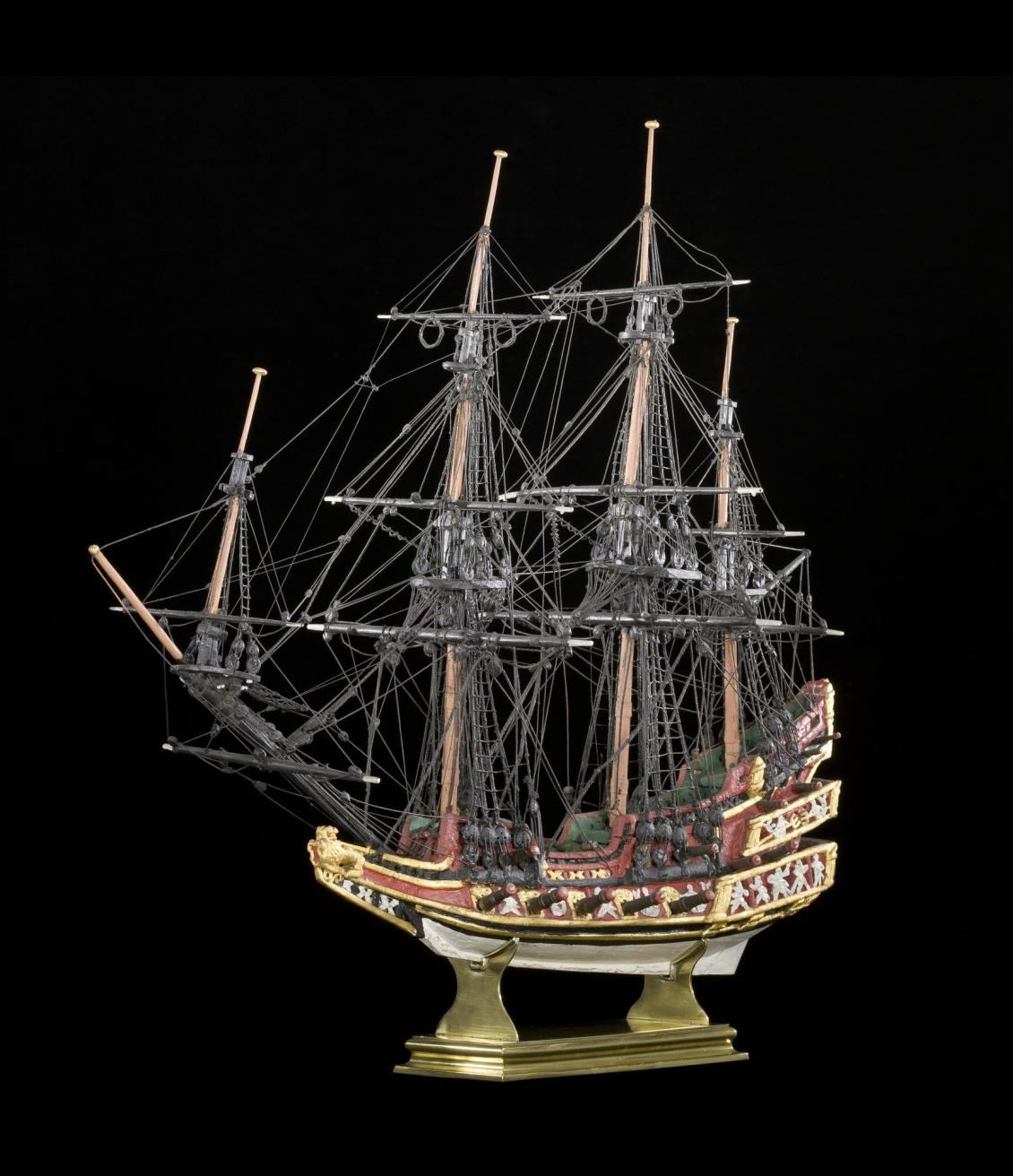
Above: Church-ship model said to accept been congenital in celebration of James and Anna'south wedlock, and may have hung in a church building in S Leith.
James and witches
In 1590, as James was attempting to bring home his new Danish wife Anna, a storm blew his transport off-class almost the coast of East Lothian. Afterward, several alleged witches from North Berwick were arrested, tortured and executed, a procedure in which James took an active part. For a fourth dimension, he was obsessed with uncovering witches, and in 1597 published a tract on them, Daemonologie.
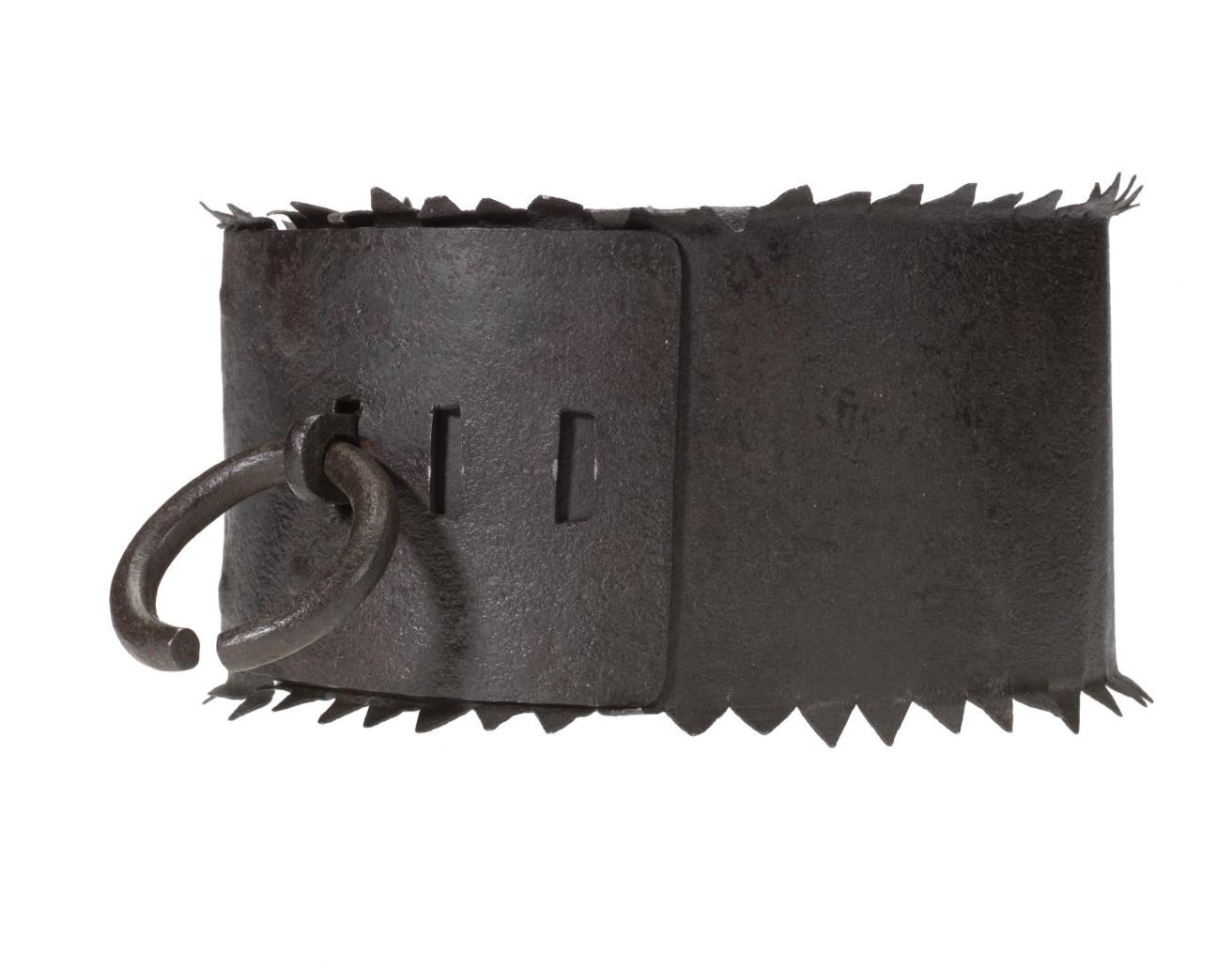
Above: Witch'due south iron neckband or jougs formerly owned by the parish of Ladybank in Fife, 17th century. You lot tin can read more most this object here.
Bloodfeud and the Borders
James was determined to assert his power every bit king, and to crack downwards on the ancient custom of bloodfeud. These violent disputes between families, and their large armed retinues, were often very long-running. Bloodfeud was seen as specially prevalent in the Borders (though information technology happened throughout Scotland), and James was to target the feud there. This was also part of his suppression of violence and cross-border raiding in the tardily 1590s, when it looked probable that he would succeed Elizabeth on the English throne.
The most famous of the Borders' feuds was that between the families of the Scotts and the Kers.
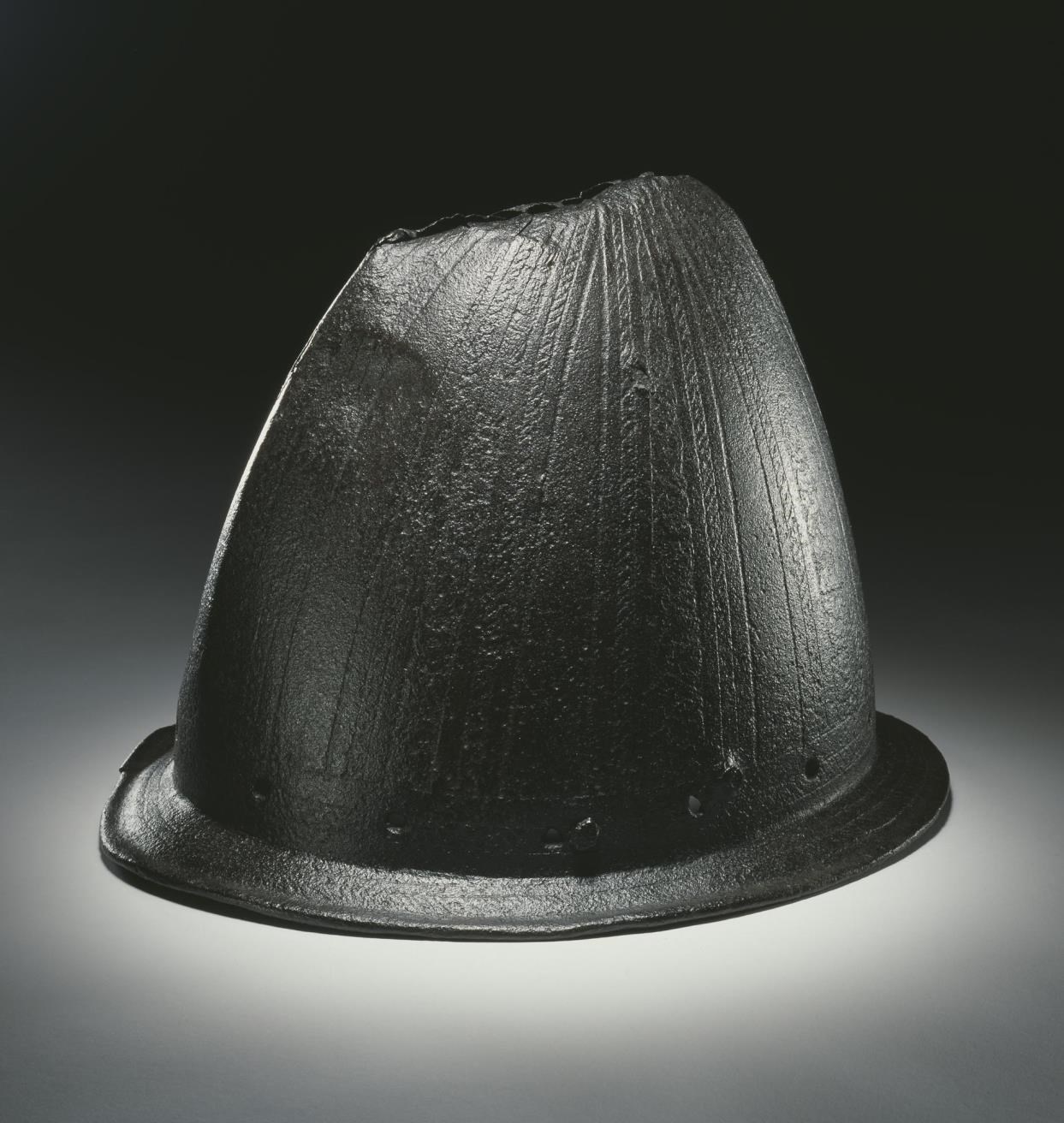
Above: An iron morion helmet known popularly equally a 'steel bonnet', headgear of the Border raiders. This was found at Ancrum, a stronghold of the Kers.
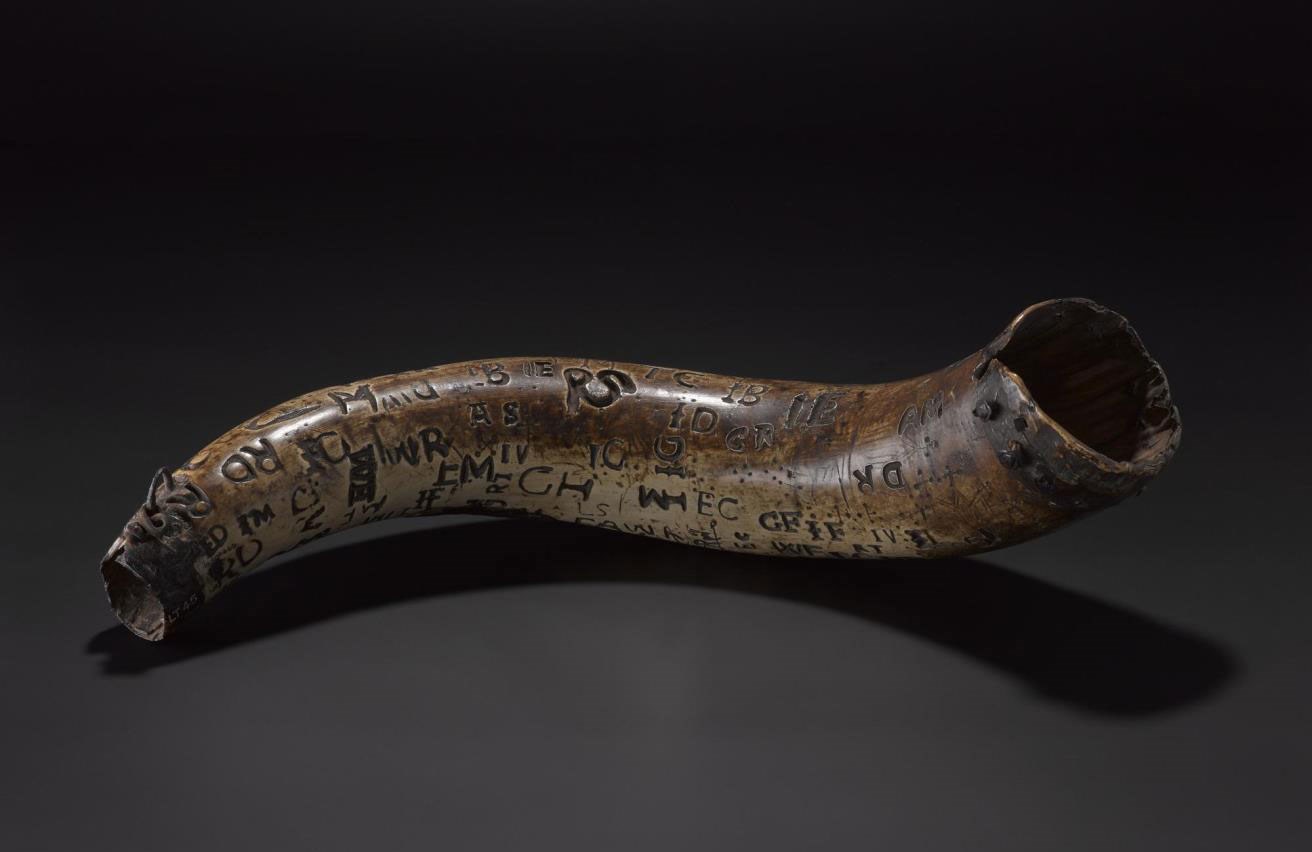
Above: Wat o' Harden'south horn: Walter Scott of Harden was one of the leading men of the Scott surname, and deputy to its caput, Sir Walter Scott of Buccleuch. He would take used this bugle to phone call his men to his side in a raid or skirmish.
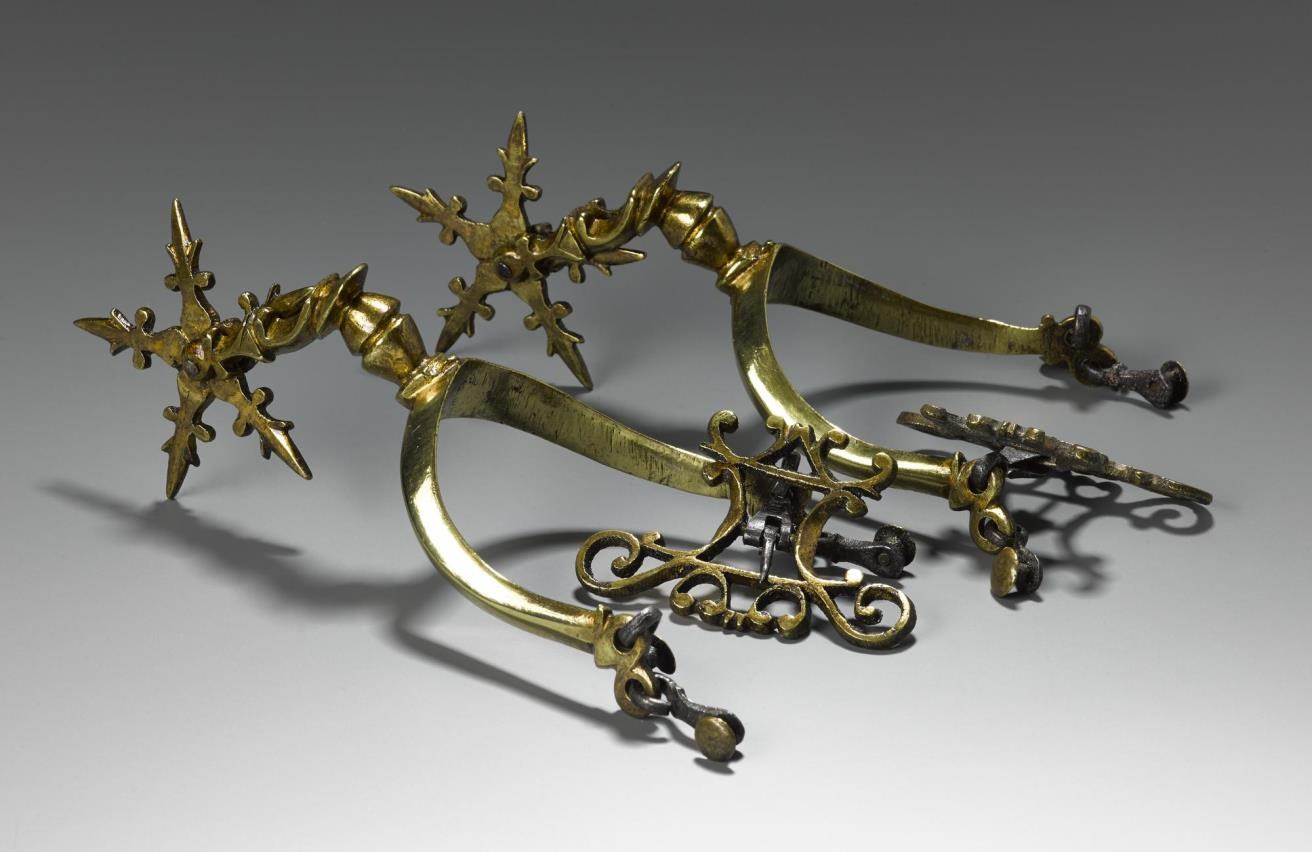
Higher up: Wat o' Harden's spurs: reputedly, when the cupboard was bare, Harden's married woman used to serve these spurs for dinner, to ask the men to become and find food.
The Marriage of the Crowns
In 1603, James Half-dozen succeeded to the English throne on the decease of his cousin Elizabeth I with no direct heirs. Every bit the new James I of England, he rode southward and was to spend almost the unabridged rest of his life in England, based at Whitehall. He is thus known to u.s. as James Six and I. James was very cracking to promote the thought of union and friendship between the previously hostile England and Scotland. He chosen information technology a 'blessed union', i of 'hearts and minds'.
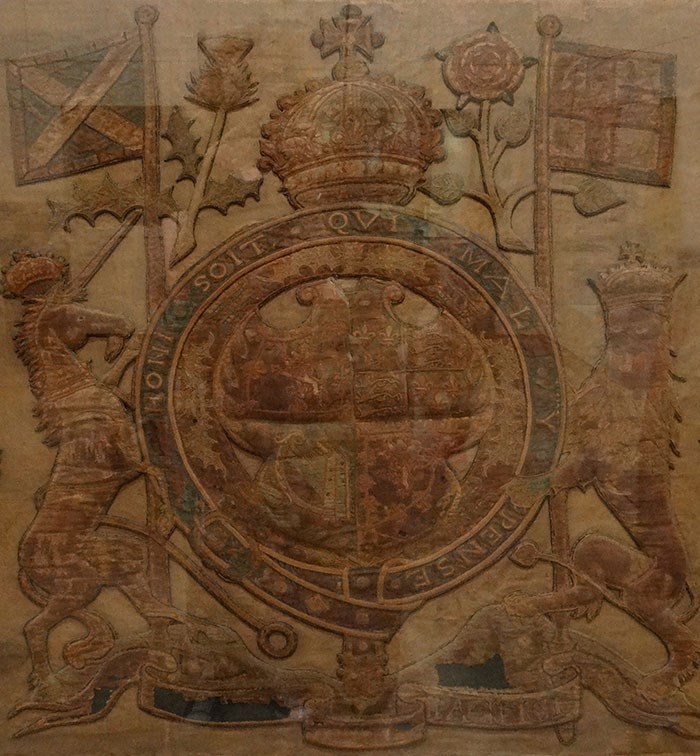
Above: Imprint showing James 6 and I's coat of arms combining those of Scotland (the saltire, the unicorn, and the rampant lion in the superlative left dominant quarter), of England (the cross of St George, the three lions in the elevation correct quarter), and of Ireland (the harp in the lower left quarter).
Render to Scotland
Despite promising on his deviation to render every three years, James was only to render to Scotland once in 1617. Having professed a 'salmon-like' want to return to the state of his nascence, he came with a multitude of English and Scottish courtiers and councillors, and spent around 3 months touring his castles and palaces, and those of the great lords and lairds.
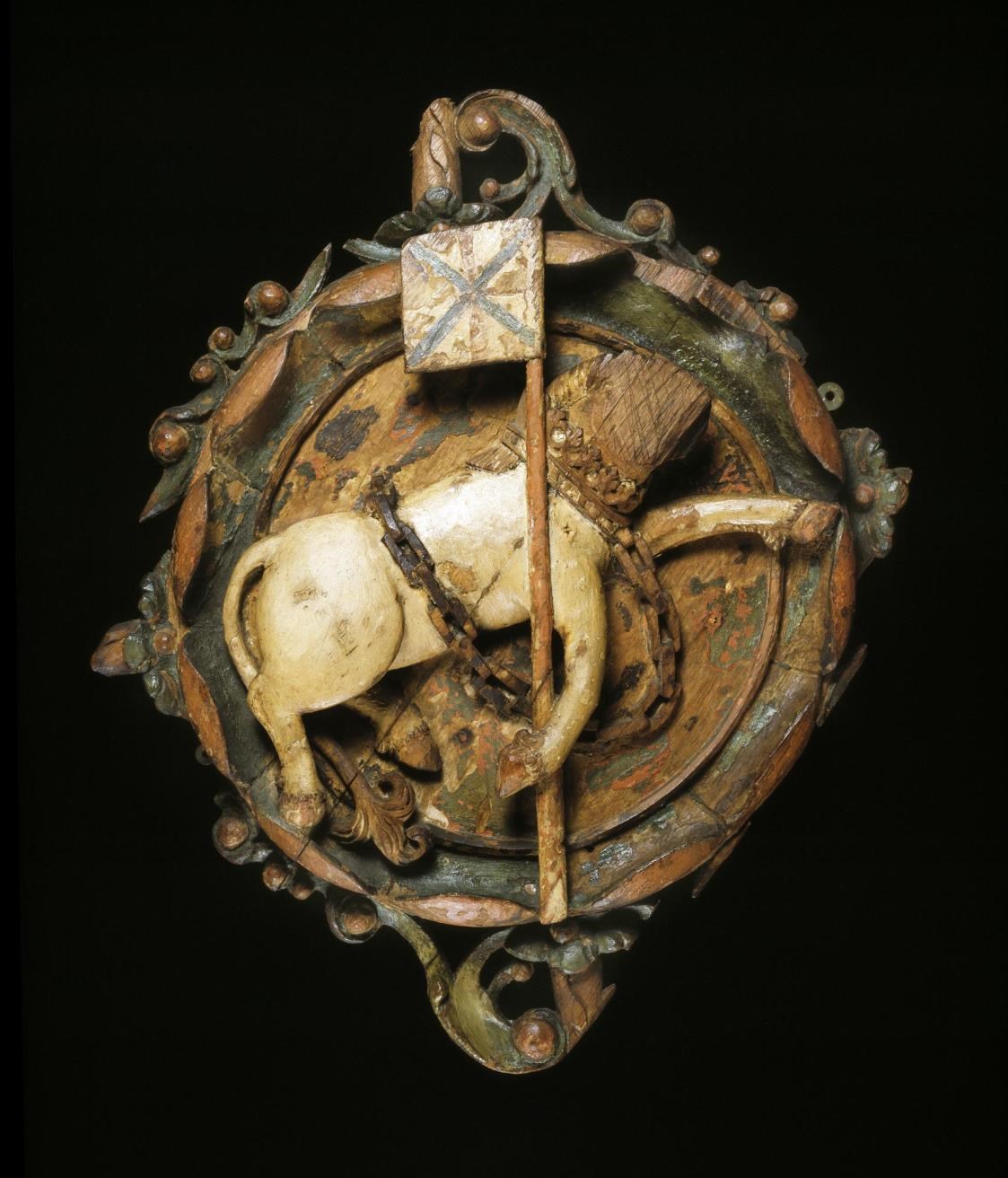
To a higher place: Ceiling dominate of carved wood, with a unicorn carrying a Union flag, with traces of original paintwork, from Linlithgow Palace, Scotland, c. 1617.
During this period, he presided over a meeting of the Scottish parliament, which famously rejected his attempt to go them to pass his ecclesiastical reforms, which became known as the Five Articles of Perth. Aristocracy Scottish households prepared for the rex's visit and there are several examples of objects and decoration made in case the king came to visit.
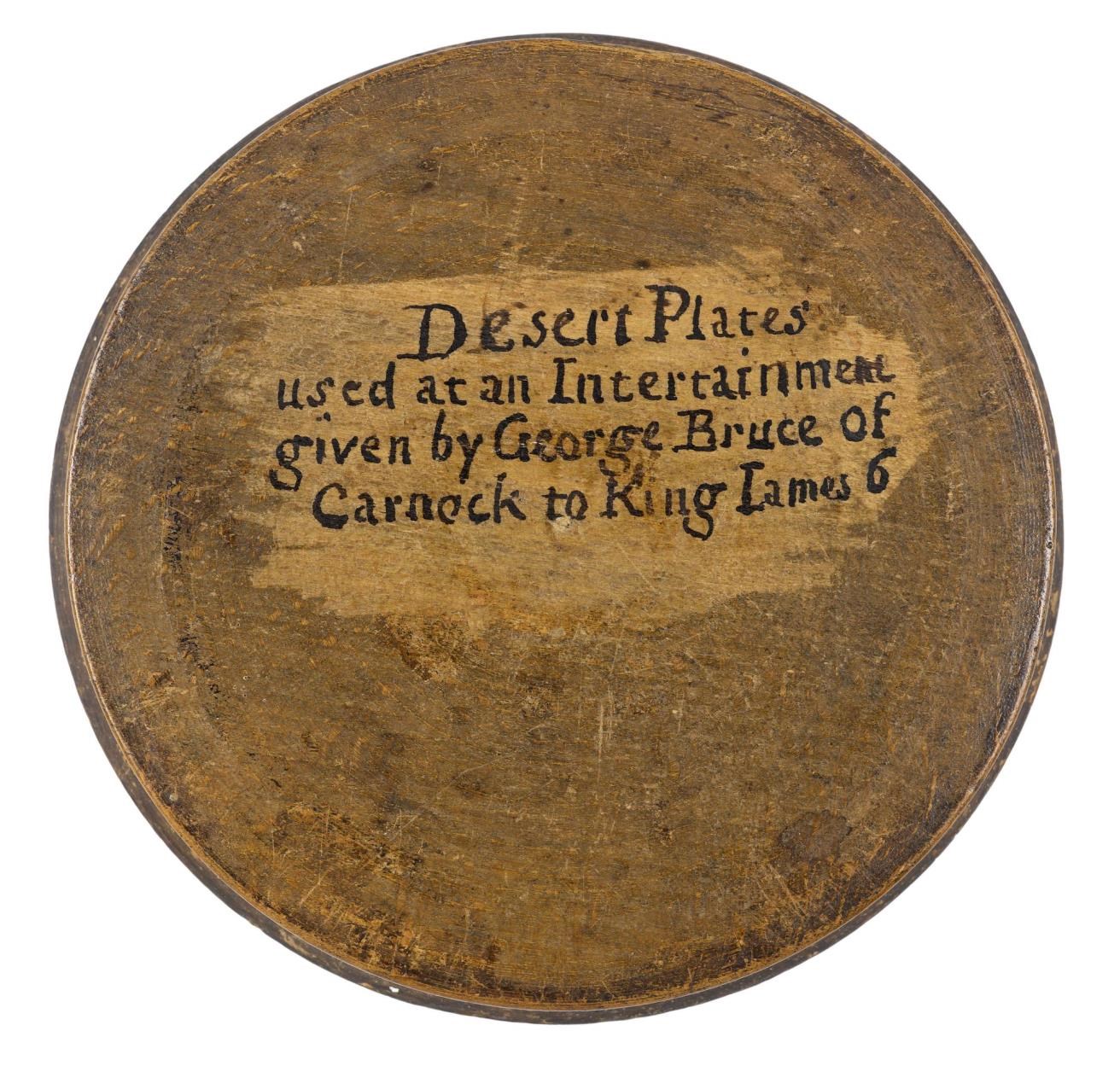
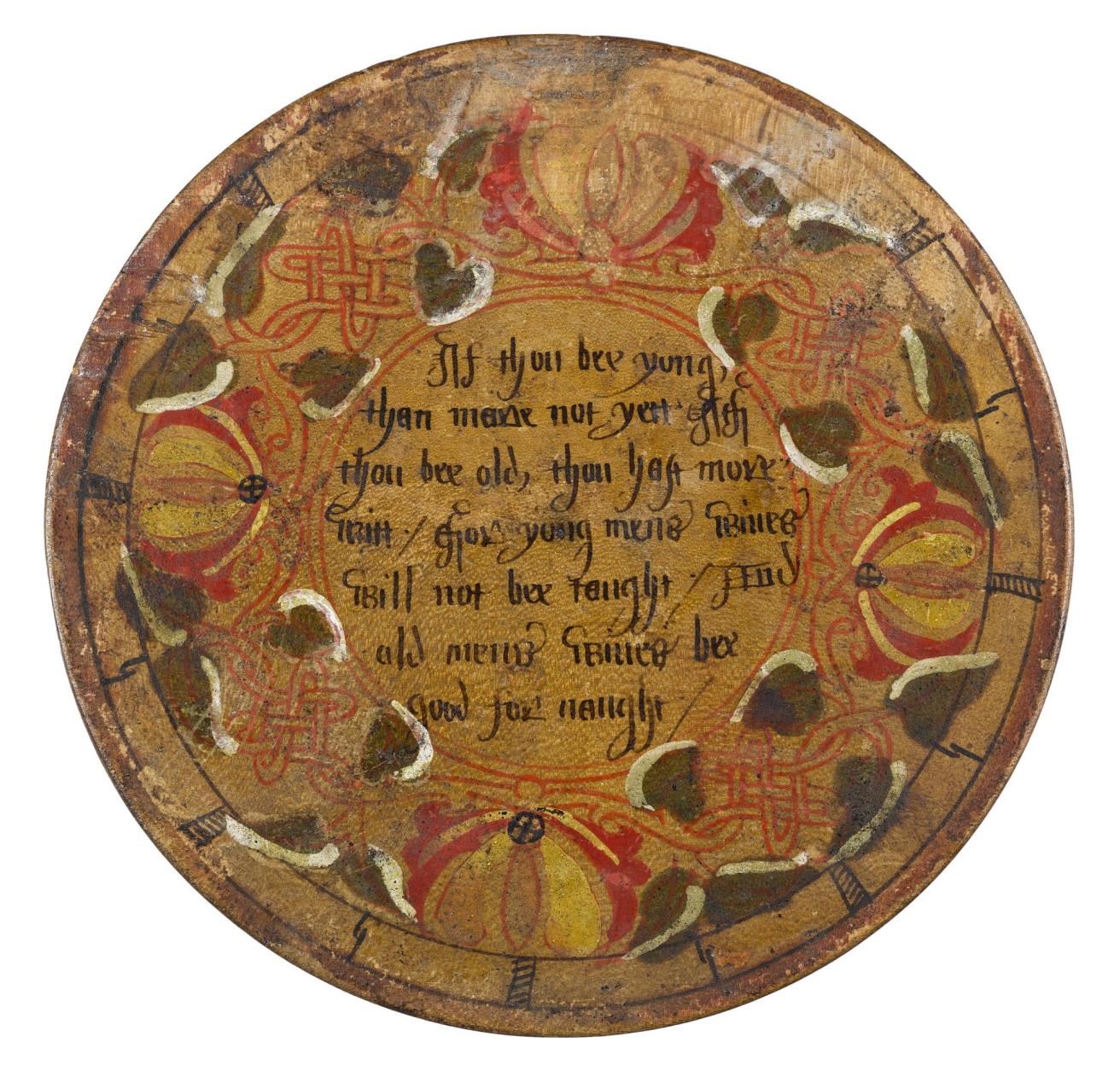
In a higher place: Circular beech box containing a set of fourteen roundels or plates used at an entertainment given by Sir George Bruce of Carnock for Rex James Six: English, 1570 – 1620, with inscription on the bottom, 'Desert Plates used at an Intertainment given by George Bruce of Carnock to Male monarch James half dozen'. James and his retinue visited the successful entrepreneur Sir George Bruce at his newly built 'palace' at Culross. Bruce was famed for his coal mine which reputedly ran for a mile nether the Firth of Along. James took fearfulness on his tour, popping up in the center of the firth to be rescued past boat.
Decease and succession
James died in 1625 and was succeeded by his son, Charles. Yous can read more about Charles hither.
Source: https://www.nms.ac.uk/explore-our-collections/stories/scottish-history-and-archaeology/james-vi-and-i/
0 Response to "Did Mary Queen of Scots Ever See Her Son Again"
Post a Comment